



Career centers in higher education that embrace AI as a friend will help students land jobs faster, improve employer satisfaction, and reduce last-minute resume panics. As important, they will show that career services delivers incredible value to the leadership on campus.
Because AI resume tools aren’t the future; they’re the present.
Let’s start at the beginning—helping students craft resumes that make it past both robotic gatekeepers (ATS) and actual humans is about as easy as teaching a cat to swim.
Possible? Yes. Pretty to watch? Not so much.
Career centers are expected to perform resume miracles with shrinking resources, while students unknowingly sabotage their chances with bad formatting, generic bullet points, and last-minute panic edits.
The stakes?
- 70% of resumes never make it past AI screening systems.
- Recruiters spend an average of 7 seconds deciding if a resume is worth their time.
- Higher education career center student-to-staff ratios average 2,263:1, making personalized resume reviews nearly impossible.
If career centers don’t adapt, students get ghosted, placement rates suffer, and employers struggle to find qualified candidates.
With such a herculean task, you need every tool that you can muster to support your stretched-thin staff to give students the help they need and impress your administration.
Here’s how AI resume tools can help scale advising services, improve job placement rates, and make life easier for everyone.
Why Career Centers Need AI to Navigate ATS and Recruiter Hurdles
Giving a student traditional resume advice is no longer enough. Coaching them to make it one page, use action verbs, and tailor it for each job only goes so far. Students are often at a complete loss for how to begin, have little understanding of what to highlight, and lack insight into their own strengths. Forget optimizing for ATS.
AI-generated resumes help gives students a push at the starting gate, giving them a draft based on the information provided to the generative AI tool. With the right tool (not all AI do the job the same), the draft could also have the optimal amount of keyword-matching for the specific job, in addition to being written in a clear and concise manner. Both of these factors help the resume pass the ATS filters to reach the eyes of a hiring decision-maker.
The next hurdle is gaining the attention of recruiters, who spend an average of only 7 seconds with each resume. The fact that the automation has helped write a compelling resume that aligns an applicant’s strengths and experiences with the job requirements means a higher chance of the recruiter lingering long enough to put the resume in the “possible” pile. A well-formatted and readable resume is a bare minimum for consideration, and automation can ensure it meets these criteria.

The AI-Reality: Resumes Already Face Machines
One of the complaints about using AI resume help is that you have taken out the humans: you are having bots talk to bots. But in some ways, that is entirely the point.
Using AI in higher education can help make sure a resume will pass the ATS hurdle to make it in front of a real human for a chance at an interview. It’s fighting fire with fire to get past the initial choke point for students seeking jobs.
Plus, with the time saved getting the basics into a resume, career center staff have more time to help students personalize and add their own unique strengths back in when they edit the resume. While the AI can help with smoother writing in the resume, it is up to the student to make corrections that show their individuality and help recruiters connect with the applicant.
Foe: Automation could diminish the value of human insight.
Automated tools lack the common sense and nuanced understanding of humans. The media is full of instances of AI creating pizza recipes that include glue, making up fake legal citations in court filings, and agreeing to sell a new car to a buyer for $1. Indeed, AI is not always 100% accurate.
Rather than diminishing the value of human discernment, AI’s limitations instead highlight how valuable and unique interaction between a student and a counselor can be. As AI in higher education takes on repetitive and patterned tasks, humans performing more nuanced and insightful work become more precious.
AI can’t replace humans in the career center. Although it is rapidly becoming more accurate, it can’t replicate the deep understanding of a student’s personal circumstances that career counselors provide. But automation does have time-saving applications where it is quicker than humans and can save staff time to bring their humanness to the table to help support student success.
Using higher education AI in circumstances where it excels rather than trying to replace one-on-one interactions with staff is the best practice. Think about it: would you hire a highly skilled electrician to do brain surgery? Nope. Use the capabilities of AI for what it does best, not for what it can’t do: connect person-to-person with empathy and insight.
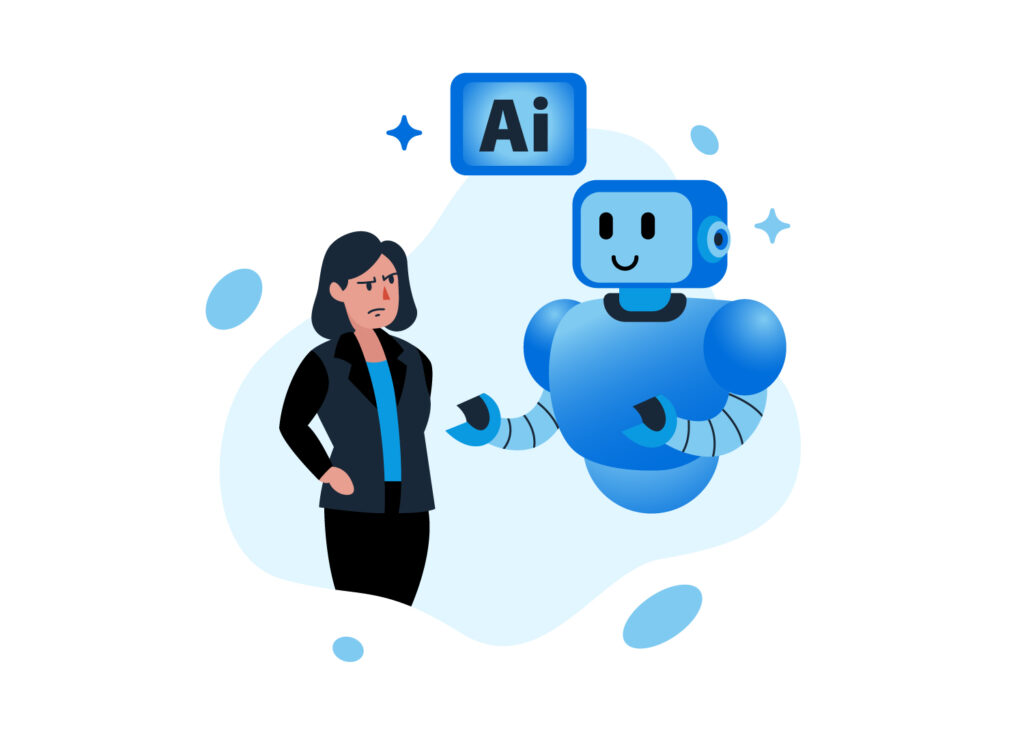
We can all agree that a robot could never replace a human. Lean into automation’s strengths to give your staff more time for the important human effective communication with students.
Friend: Use AI to streamline career services for better one-to-one meetings (without blowing your budget).
Personal interaction with students is the most valuable task career advisors perform, so freeing up more time allows career centers to allocate more staff time to providing students the guidance that moves the needle. Where can you find time for this?
Helping write and review resumes is one of the transactional tasks that can take up 20 hours a week for each staff member. Using automated resume tools can reduce the time spent on repetitive—and necessary, but less targeted—administrative tasks, freeing up more than half of that time. This means counselors have more time to delve into a student’s aspirations and talents to help steer them in a direction that will result in better career and academic outcomes.
AI in higher education can be a very cost-effective way to handle resume assistance, allowing machines to perform the pattern recognition and formatting they do well. At the same time, the best qualities of staff members are more available to do what humans do best: listen, understand, and interact to help students find their pathway to a suitable career.
How can Career Centers leverage AI in higher education?
So, what can automation do in the career center, and how can you measure that success? AI in higher education helps use staff time more effectively, inspire students to get started, and impresses administrators in higher education institutions Artificial intelligence and higher education can work together.
Save time in resume and cover letter creation.
Calculate the average time it takes a staff member to help a student write a first draft of these important job-seeking tools. Now add up the staff time freed up by providing students an AI tool to generate these materials. Take a look at our ROI Calculator to see how valuable this can be.
Reduce student hesitation by making resume creation fun.
The task of creating a resume can seem daunting to students. Usage of AI in higher education is a way of almost gamifying the process, allowing students to play as they tweak the inputs and outputs to create different versions of their resume with ease.
Increase student engagement with AI higher education tools.
By offering tools that students can interact with 24/7, from their dorm rooms or kitchen tables, you can encourage more of them to use the career center services. This gives an opening to involve more of your student population and boost the effectiveness of your office.
Gather analytics to prove the ROI of AI for higher education.
To prove the effectiveness of artificial intelligence tools and impress the administration with your forward-looking methods, get baseline metrics on the number of students served, the number of job applications sent out, interview and employment rates, and staff time spent per student.
Friend: Use AI to Save Time, Improve Resume Quality, and Scale Services
Career centers are understaffed, overbooked, and working with limited resources. So, it’s impossible to manually review every resume.
Solution? AI resume tools (like JobScan) that offer educational pricing that costs less than the espresso machine collecting dust in the break room.
These tools allow you to scale the efficiency of your career services by effectively using a one-to-many approach to tasks such as resume writing and review. As a result, you will be improving the quality of your one-on-ones by freeing up more time and attention to meet with those students.
Support More Students (Without Burnout) Using Higher Education AI
Career centers strive to serve as many students as possible. Many would agree that K-12 education counseling centers are overburdened with high school counselors having student-to-counselor ratios of 400:1. It’s even more challenging for college career advisors, with average student-to-professional counselor ratios of over 2,000:1.
Automation can help staff get more students started on resumes and increase the efficiency at this step in the learning process. AI doesn’t replace career advisors, but it helps scale resume reviews efficiently.
For example: Instead of 20 individual resume reviews, take a one-to-many approach by hosting a group AI-assisted session where students submit resumes in advance. Generative artificial intelligence gives instant feedback, and career advisors step in to refine strategy.
Foe: Job seekers are independently substituting automation for human services.
It’s alarming how fast AI has entered college spaces, and it is concerning if university students substitute AI for the human thought and consideration necessary for effective learning experiences. Automation is being hyped to do everything for us, but it really is just a tool, albeit a very useful one.
Resumes churned out by AI without the crafting and refining to the individual student won’t ring true to employers, may have misleading information, and won’t necessarily help students succeed without careful consideration and coaching from career center staff.
Friend: AI is a shared language that engages students on their terms.
The reality is that young people are embracing AI like ChatGPT tools at historic rates. This isn’t surprising. Each generation adapts and adopts technology in different ways. Home computers, the internet, personal smart devices, and social media, to name a few.
Students are going to use these tools going forward, regardless of the way career centers adapt to deliver their services. If career centers require that every student meet with them face-to-face to have their advising appointment, it will create a barrier that will lead to fewer appointments, less coverage for students, and worse outcomes. And they’re still going to use chatbots.
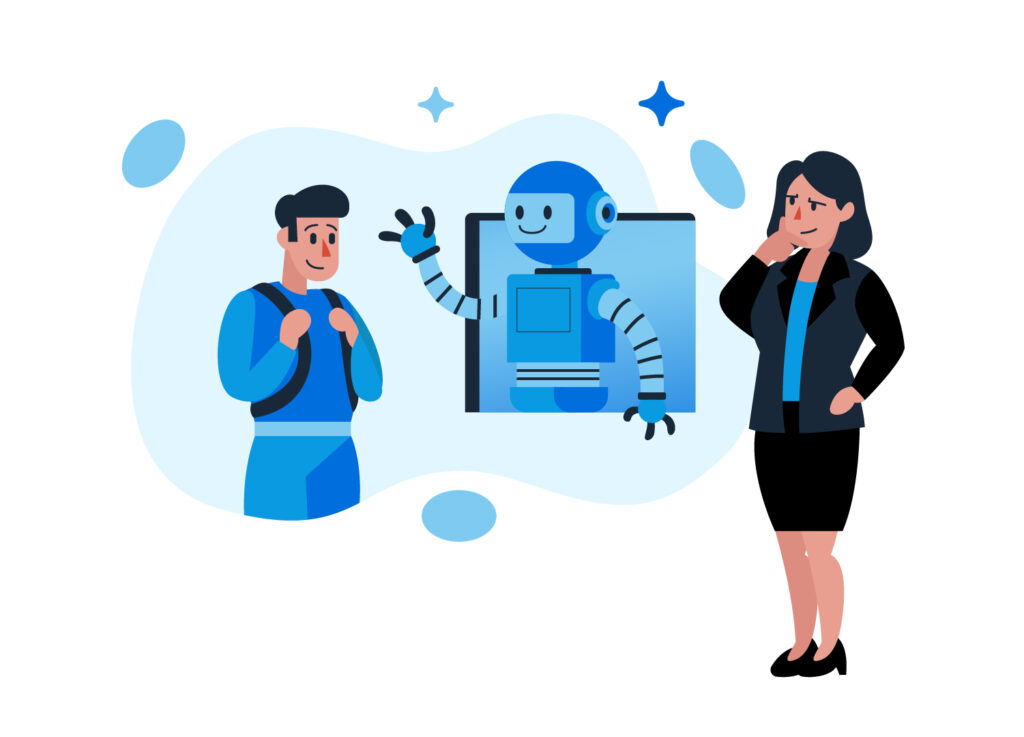
Students see three benefits from AI:
- They treat artificial intelligence tools as an asset
- They don’t want to spend time, effort, and brainpower trying to ‘play the game’ writing a resume, cover letter, or optimizing their LinkedIn profiles
- AI removes the repetitive work to focus on what they think is most important
While many technologies fundamentally change how we engage with each other, work, and live, they also allow us to do new things – and many old things better. Automation and higher ed AI tools actually open the gates for career centers to deliver services more efficiently and empower their coaches to do the things humans do best!
By taking the burden of transactional tasks, career coaches can now focus their efforts on personal advice and strategic career development for learners. And these services can be done far more easily virtually than a resume writing or review session can.
This is where career centers can meet students where they are and fill that gap. Imagine booking a dozen students for virtual “career strategy” sessions. The students can have that call from their dorm, study hall, or anywhere. This is much more attractive and convenient for students.
In addition, students arrive at the meeting room with an ATS-optimized resume, cover letter, and profile already completed. You then spend the hour having a deep, nuanced discussion about their strengths, goals, and ambitions. Not one minute is spent on questions like, “What are your soft skills?”
Automation and AI tools might feel like your foe here, but in reality, they’re optimizing your time and meeting students where they want to be.
Foe: Ethical Considerations if AI is Used as a Resume Factory
The impact of artificial intelligence adoption on campus has been so fast that it’s hard for ethics to keep up. What if students just generate resumes, never check them for accuracy, and get themselves an interview with a completely fabricated resume? Not only does this reflect poorly on the student seeking an internship or job, but that student also doesn’t help your educational institution’s reputation.
Think of AI in higher education as a spell-checker for resumes: it helps with structure, keywords, and clarity. But it doesn’t replace judgment, storytelling, or real experience.
Career centers should set clear AI and higher education guidelines, encouraging students to use AI for enhancement, not to manufacture resumes that don’t accurately reflect their experience and skills.
Friend: Scale Personalized Resume Feedback with AI-Assisted Review Sessions
With much less effort, career centers’ use of AI to provide assistance to their students, not as a replacement for student authenticity. Career counseling can help undergraduates choose the sources to feed into the AI tool, helping them understand the process and be accountable for shaping the end result with a head start from the AI output.
In this way, AI can help prevent fabrication because it will have stronger discernment of the ‘data’ provided than human eyes can. Using AI in higher education to prepare students for the workplace, career coaches will have more time to help students represent their aspirations and qualifications truthfully, and students will end up with stronger resumes.
Plus, the career center will be modeling ethical use cases for AI in higher education, which students will need in the careers you help them achieve. Understanding the responsibilities that come with using automation tools is an area that will strengthen students’ critical thinking skills and judgment when they enter the workforce.
Blending AI and Human Feedback for the Best Resume Results
Artificial intelligence can catch structural errors, but only humans can contextualize what recruiters actually want. The best approach blends a mix of AI for formatting errors, missing keywords, and weak phrasing. Career advisors provide final strategy tweaks, prioritizing achievements, storytelling, and readability.
Implementing blended AI with human resume reviews allows career centers to provide fast, personalized feedback at scale. Using this AI in higher education best practice recommendation for resume content creation leverages the power of tech while better utilizing human resources to drive career readiness.
Conclusion: Helping Students Beat the Machines (While Keeping Your Sanity)
Career centers will reap numerous benefits by using an AI higher education tool specifically designed to help job seekers. Here are some quick best practices to help you get started with artificial intelligence higher education tools:
- Take a one-to-many approach using AI tools for initial resume work.
- Use blended AI plus 1-on-1 human resume reviews to provide fast, personalized feedback at scale.
- Host AI-powered keyword workshops to bridge the student-employer language gap.
- Engage students where they already are: using AI for many tasks.
- Extend the reach of career services and use human staff for what they excel at: personal feedback, ensuring student learning, and helping students connect the dots ethically.
Everything goes toward the bottom line of helping students get hired fast. Streamlining and kickstarting the resume creation process with students is just easier and faster when you use the tools of today to help the alumni of tomorrow succeed in the workplace.
More expert insights on how to make Career Services transformational: