




One career advisor for every 2,500 students. That’s the reality in career services right now, where overwhelming staff-to-student ratios are the norm. From teams of 1-10 staff serving populations of 400 to 60,000 students, the math simply doesn’t work. We get thrown off by the the stats we think matter: only 17% of students regularly use career services, while 31% never engage at all. But if you’re already under water, engaging the students you’re not right now doesn’t solve the problem—it would compound it.
The question isn’t how to reach everyone—it’s how to identify who needs you most.
The Impossible Math
Let’s face the brutal reality together. You’re managing a career center with shrinking budgets and expanding expectations. Your institution expects you to improve placement rates, boost student satisfaction, and demonstrate ROI—all while your staff-to-student ratio makes personalized attention mathematically impossible.
The numbers tell a stark story. With 31% of students never engaging with career services despite needing support, we’re facing a crisis of the “silent strugglers”—students who desperately need help but never walk through your door.
These aren’t the go-getters booking appointments or the anxious students sending frequent emails. They’re the ones quietly drowning in the job search, submitting dozens of applications into the ATS void, slowly losing confidence with each automated rejection.
“We know some of our students are absolutely crushing it,” says Jeremy Schifeling of The Job Insiders, “That’s awesome, but some are struggling and struggling silently. If there was some way to really understand who’s struggling and how we can reach them, that could be a superpower for us as coaches.”
How many potential success stories are we missing? How many students graduate underemployed not because they lack talent, but because they never learned to navigate the modern job market?
When you’re spread this thin, traditional one-size-fits-all approaches aren’t just ineffective—they’re unsustainable.
Beyond Pizza and Popcorn: Why Does Traditional Engagement Fail?
A career director shared with us a story on a recent webinar that perfectly captures our collective struggle: his team went through 1,000 pounds of popcorn trying to attract students to career services events. A thousand pounds. Let that sink in. Yet despite these Herculean efforts at engagement, the fundamental problems persist.
Why? Because we’re fighting structural barriers that snacks can’t solve:
- The 9-to-5 problem: Your office hours clash with class schedules
- Email fatigue: Students receive so many emails a day and have stopped reading
- The confidence gap: Students who need the most help are often least likely to ask for it
- The awareness void: Many students don’t know what career services offers beyond resume reviews
- The weight of transactional tasks: You spend 80% of time on repetitive tasks, like resume reviews, cover letters, LinkedIn, and interview practice
The traditional engagement model assumes students will come to you when ready and you will have the bandwidth to give them the individual attention they need. But readiness and need rarely align.
That student crushing it with three job offers? They’ll show up to share good news. The student whose 50 applications yielded zero interviews? They’ve concluded the time they’ve already invested in their resume “doesn’t work” and have stopped trying.
The Triage Revolution: Learning from EMTs
On a recent Jobscan webinar, Schifeling introduced a game-changing analogy during the webinar: think like an EMT.
When paramedics arrive at the scene of an accident, they don’t treat patients first-come, first-served. They rapidly assess who needs immediate intervention versus who can wait. Career services needs the same approach.
The Problem: Treating all students equally wastes precious resources. You spend 30 minutes reviewing a resume for someone with multiple offers while the student one rejection away from giving up never gets help.
Data-driven triage is one piece of the puzzle. For a complete decision framework for program prioritization during budget cuts, see our companion guide.
“For five and a half thousand students, that’s something like 15,000 hours (of transactional tasks),” says Schifeling, “And I was thinking two staffers at 2000 hours a year. Even if you spent your entire year working on interviews, you wouldn’t get close.”
The Solution: Implement a data-driven triage system that identifies who needs help versus who’s crushing it. Use engagement metrics and outcome data to prioritize interventions.
Real Example: Jeremy shared the story of “Joe Jobscan”—a student who received three job offers but never told career services. Without data tracking, the career center would never know this success story existed. Meanwhile, staff time that could help struggling students goes to those who’ve already succeeded. This isn’t about abandoning high performers; it’s about strategic resource allocation.

Focus on aggregate patterns and intervention triggers, not individual monitoring. Use data to identify who needs help, not to surveillance their job search.
Actionable Data Points That Matter
Stop flying blind. These four data points can transform your data analysis triage system:
1. Last Login Tracking* – Students who haven’t accessed career platforms in 30+ days need proactive outreach. They’re not disinterested; they’re likely overwhelmed or discouraged.
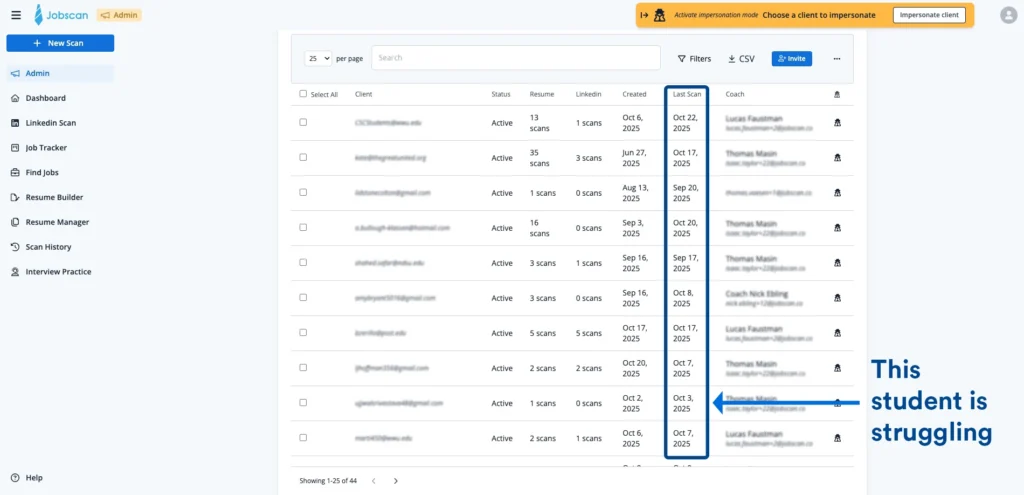
*Career Coach Tip #1: Set up automated alerts for students with no platform activity. A simple “How can we help?” message can re-engage silent strugglers. A data analytics career advisor can support your professional growth by monitoring these actionable data points to identify when you need assistance or motivation. They also use trends, such as company application data, to tailor guidance, help you address skill gaps, and connect you with opportunities that align with your goals. Company Application Trends – Which organizations are your students targeting? This data shapes employer relations strategy and reveals skill gaps in your student population.
Last engagement date. It’s simple, revealing, and actionable. Students who’ve gone dark for 30 days need you more than frequent flyers.
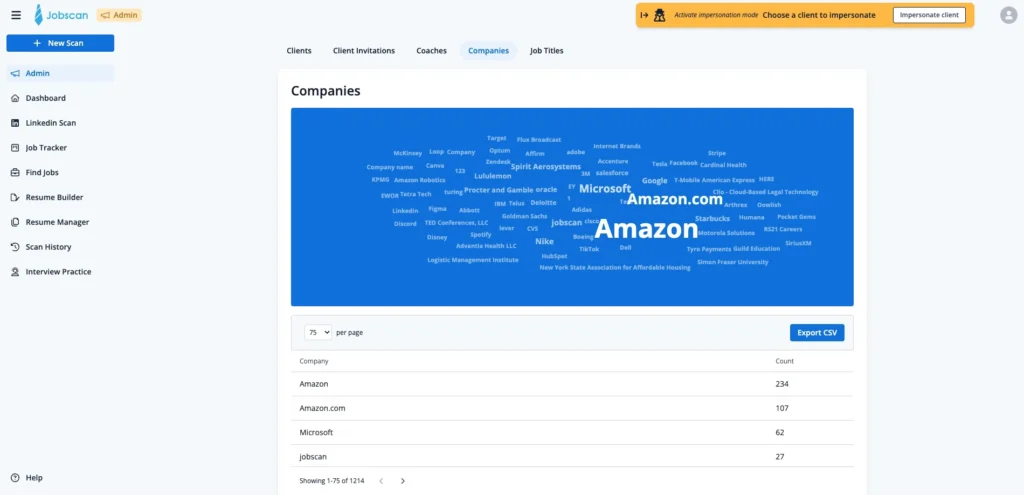
2. Company Application Trends – Which organizations are your students targeting? This data shapes employer relations strategy and reveals skill gaps in your student population.
3. Job Title Analysis** – Track what positions students pursue versus what they’re qualified for. Misalignment here signals need for career coaching intervention.
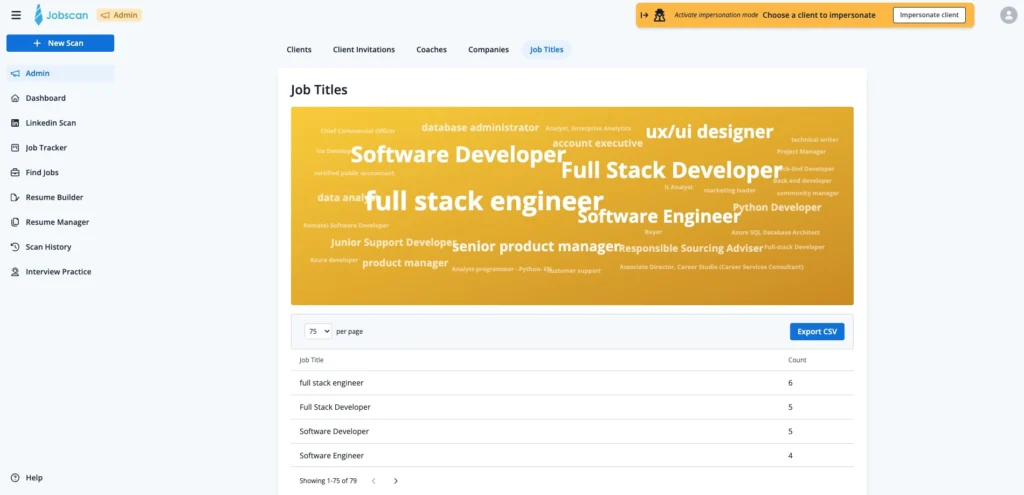
**Career Coach Tip #2: Students applying exclusively to “dream jobs” without building experience need your guidance most urgently.
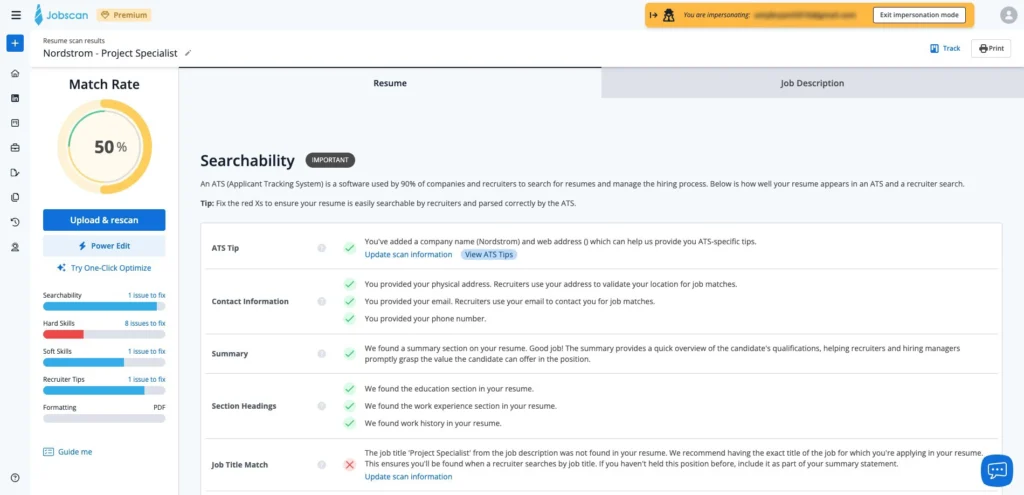
4. Resume Match Scores – Students consistently scoring below 50% match rates against job descriptions need immediate ATS optimization support. They’re likely qualified but invisible to automated systems.
Lead with ROI. Show how triage improves placement rates for vulnerable populations—metrics administrators care about. Frame it as maximizing existing resources, not requesting more.
Implementation Without Overwhelm
You don’t need sophisticated analytics platforms like Jobscan to start. Here’s your week-one implementation plan:
- Export CSV files from your existing career platform weekly
- Create simple filters to identify students with low engagement or poor outcomes
- Use mail merge for targeted outreach based on specific triggers
- Track response rates to refine your approach
- Document success stories to build your case
Start with one data point. Master it. Add another. Within a semester, you’ll have transformed from reactive to proactive service delivery.
When you are ready to scale past spreadsheets, a career services platform built for universities can surface these signals automatically, from last-login tracking to resume match scores below 50%.
Making the case to administration becomes simple when you can say: “By focusing on the 200 students showing signs of struggle, we achieved a 40% improvement in placement rates compared to our previous broadcast approach that reached 2,000 but helped 20.”
Start with free tools. Google Sheets, basic CRM exports, even manual tracking beats flying blind. The webinar participants managing 10,000+ students started with Excel.
Transform Your Approach Today
The shift from guesswork to strategy doesn’t require perfection—it requires starting. Every day you operate without data is another day silent strugglers slip through the cracks. Your students need more than pizza and popcorn; they need targeted intervention based on real indicators of struggle.
The math may be impossible, but strategic triage makes the improbable achievable. Stop guessing. Start knowing. Your students—especially the quiet ones—are counting on it.
Bring Jobscan to your school
Interested in Jobscan for your university career center? Check out our Higher Education solutions page.



