




Entry-level job application speed is fundamental to success in a challenging labor market. Tools can give career advisors the time to guide students one-on-one to craft the most authentic content and strategy, or empower students to move quickly on their own.
Otherwise, you may encounter scenarios like this:
Derek bursts into your office clutching a summer internship posting from his dream investment firm. You help him tailor his resume, and he returns three days later, already picturing himself networking in sleek downtown offices. Together, you polish his materials and prepare to submit—only to find the application portal closed. More than 1000 students beat him to it.
Dream, dashed.
Why You Need Students Ready to Apply In Less Than Four Hours
Employers are deluged with resumes from the moment they post a position, so if you students aren’t on the ball, they may not even get a chance to apply. How can you get your students to get their resumes done faster and apply sooner?
While external employment postings may stay visible for a couple of weeks, employers frequently close listings the moment they secure “enough candidates,” regardless of the posted deadline. Anecdotal evidence suggests that prospective applicants notice that job ads disappear in two days after they are posted. Hiring managers report that they often pull ads once they have a large enough pool of applicants.
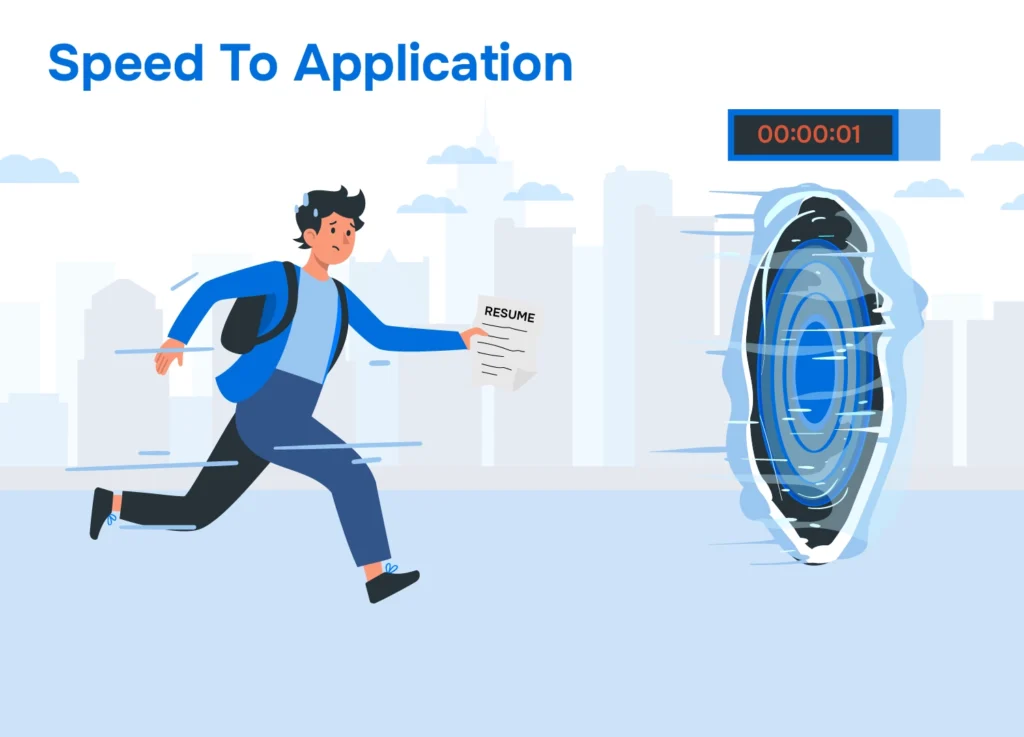
Entry-level job applicant speed is the name of the game now. If your students’ applications aren’t submitted within the first couple of days, they may have zero chance of being considered. The job listing might simply disappear, or it may still be up, but recruiters are only looking at the first couple of hundred applicants.
The Research: Why Job Postings Close Faster Than Students Think
The average time-to-hire is a metric HR professionals track to hasten the hiring process, but this emphasis on efficiency can make it more challenging for qualified candidates who don’t apply quickly. While 44 days is the global average time-to-hire, times in North America are generally much shorter, and high-volume roles average 16.2 days. As employers try to squeeze time-to-hire, getting applications in sooner is urgent to boost graduate job stats.
Researchers have also found a negative duration dependence; job search success declines over time. The longer a job seeker goes without receiving a job offer, the less effort they put into the process, and the less likely employers are to invite them to interview. The passage of time in the search process intensifies the difficulty of getting students’ resumes seen by hiring managers.
Another challenge for external applicants is the “hidden job market,” in which an estimated 70% of positions are never publicly advertised, but are filled by internal candidates, referrals, and through networking. This puts extreme pressure on posted positions, with the volume of applications making it hard to get noticed.
The Student Context: Why Entry-Level Job Application Speed is Critical for Early-Career Candidates
Getting that valuable internship or first job out of college is more difficult than ever. Students who complete internships are 25% more likely to secure full-time employment within 6 months of graduation, with salaries averaging $15,000 higher. Plus, college grad job searches are getting more challenging.
- The stakes are higher for students attempting to break into the job market, as the softening labor market is disproportionately hitting young college graduates, with a 4.59% unemployment rate, higher than the overall rate.
- The Competition Is Fiercer: Entry-level and internship roles receive disproportionately high application volumes, making early submission essential to be in the “first batch” reviewed.
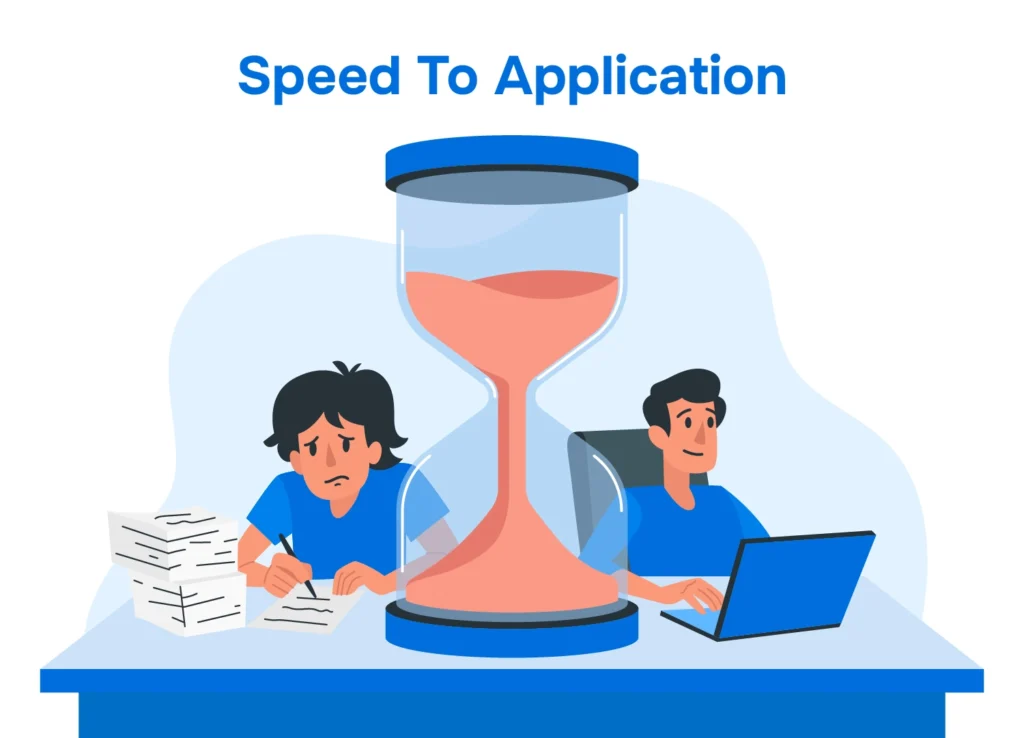
- The Time Is Scarcer: Students face unique time management challenges in balancing academics and job search tasks. They’re juggling projects and exams, extracurricular activities, and often part-time jobs.
Building the Foundation: Preparing Students for Rapid, Quality Applications
Career advisors can help students demonstrate their competence to potential employers by guiding them to execute a streamlined job application process, highlighting their organizational skills and initiative. An employment or internship application strategy is key. Here are some student job search tips to employ:
The Master Document Strategy
- Create a comprehensive “master resume” containing all achievements, skills, and quantified results
- Develop 2-3 targeted resume templates for different role categories (e.g., marketing roles, technical roles, business analyst roles)
- This pre-work transforms applications from “drafting” to “editing”—a significantly faster process
ATS-Friendly Formatting
- Emphasize clean, simple formatting (standard fonts, 10-12-point, standard margins)
- Avoid tables, graphics, and text boxes that slow ATS processing
- Technical cleanliness eliminates friction and speeds employer review
Time Management Integration
To help with time management for applications, student coaching is central. Here are some techniques that work:
- Batching: Group similar tasks (e.g., all resume tailoring on Tuesday afternoons)
- Eisenhower Matrix: Prioritize urgent and important applications first
- Academic Calendar Mapping: Schedule application sprints during lower-workload periods
- “Eat the Frog” Principle: Complete the hardest prep work (building master documents) early when motivation is high, preventing quality decline later when fatigue sets in
A JOB APPLICATION COURSE IS A GREAT WAY TO PREPARE STUDENTS ON BE QUICK TO APPLY
Technology as a Force Multiplier: Tools That Accelerate Without Compromising Quality
In the low-latency environment for job candidate assessment, how fast should college students apply to jobs?To be considered by employers, time is of the essence. AI tools are accessible resources that level the playing field for students with heavy academic loads, helping them achieve parity with candidates who have more time flexibility.
AI-Powered Content Optimization
- AI resume summary generators create keyword-optimized summaries in seconds
- Automated bullet point enhancement transforms generic descriptions into results-driven achievements tailored to specific job descriptions
- Provides single-click tailoring that would take 20-30 minutes manually
Application Automation
- Job application autofill tools can save hours per week by auto-populating forms across thousands of websites
- Browser extensions automatically extract keywords, save job details, and clip information without tab-switching
- Integrated workflows streamline the entire “find-and-apply” loop
Technology adoption is no longer optional. Students using AI tools gain a measurable advantage in both velocity and quality control over those relying solely on manual processes. Using a student AI resume builder for multiple applications gives students the advantages they need to push their entry-level job application speed to a level necessary to compete.
Beyond Submission: Maintaining Velocity Through Interview Prep
The need for speed doesn’t stop when students hit “submit.” Here are some first job application tips to help students through the next steps:
- Immediate Interview Response: Reply to interview invitations same-day or within 24 hours to signal continued enthusiasm and professionalism
- Proactive Timeline Inquiry: Ask about hiring timelines during/after the interview process to maintain momentum and reduce waiting anxiety
- The STAR Story Library: Pre-prepare 5-10 STAR-method anecdotes (Situation, Task, Action, Result) so students can pivot quickly from invitation to interview without days of prep
Advisors can help students build their STAR library during slower academic periods so they’re always “interview-ready.”
Implementing a High-Velocity Framework in Your Career Services Office
The work of career advisors is central to the success of college grad job searches. Yet because entry-level job application speed is fundamental to success in a challenging labor market, AI can bridge the gap, giving career advisors the time to guide students one-on-one to craft the most authentic content and strategy.
Transform your office’s strategy with these actionable steps:
- Workshop the “How”: Run sessions on master document creation, template development, and batching strategies
- Introduce the Tools: Provide curated recommendations for AI resume tools and autofill extensions
- Build Accountability Systems: Consider application sprints, peer accountability groups, or milestone tracking
- Educate on the “Why”: Use the Time-to-Hire and Negative Duration Dependence research in workshops to help students understand this isn’t about panic—it’s about strategic positioning
The job search is fundamentally biased against the slow and unorganized. By equipping students with velocity-enabling systems, career services professionals transform application speed from an insurmountable challenge into a sustainable competitive advantage.


